PROJECT NAME:
KI INNOVATION
WHAT:
ESTABLISHING LONGTERM HEALTH
YEAR:
2023

Designing support beyond information
Exploring how to support women affected by preeclampsia — shifting from short-term awareness to long-term health and emotional support.
Role: UX / Visual Designer
Focus: Research synthesis, information design, visualization
Context: Research-funded exploratory project

THE CHALLENGE
Women diagnosed with preeclampsia often leave the hospital with limited guidance on what the condition means for their long-term health.
Women diagnosed with preeclampsia often leave the hospital without a clear understanding of what the condition means for their long-term health.
While the acute phase ends with childbirth, preeclampsia is linked to an increased lifetime risk of cardiovascular disease. Despite this, follow-up support is limited, leaving many women without guidance on how to manage their health over time.
The challenge was to explore how healthcare services could better support women beyond childbirth — not only through information, but by addressing emotional needs, rebuilding trust, and enabling long-term support.
REFRAMING THE PROBLEM
Initial assumptions focused on a lack of information — that women needed a better understanding of the risks associated with preeclampsia.
However, early interviews quickly challenged this.
Many women were already highly aware of how serious their condition had been. Instead, they described a traumatic experience, often followed by a lack of emotional support and continuity after leaving care.
This shifted the focus from informing to supporting.
Rather than prioritising lifestyle advice such as diet and exercise, the direction moved towards:
rebuilding trust in care
addressing emotional needs
creating a sense of continuity after discharge
The insight was clear: long-term behaviour change can only be introduced once emotional needs are acknowledged and supported.
shift / reframing.
Women diagnosed with preeclampsia often leave the hospital with limited guidance on what the condition means for their long-term health.
project overview.
Defining the scope, direction, and focus of the project.
This project explores how healthcare services can support women after preeclampsia, with a focus on long-term health and behaviour change.
Working within a research initiative, I built on existing studies and conducted interviews and surveys with affected mothers to understand their experiences.
The work moves beyond isolated touchpoints and considers the broader healthcare ecosystem — including patient journeys, information flow, and coordination between care providers.
The outcome is a set of service concepts illustrating how support could be extended beyond the clinical setting.
the process.
Over seven weeks, the project moved from qualitative research to synthesis, concept exploration, and early design proposals.
Interviews, thematic analysis, and survey data were used to identify patterns and define key opportunity areas, which informed the direction of the concepts.
I contributed to both research and concept development, leading the quantitative survey design and synthesis, and playing a key role in translating insights into design directions and concepts.

research.
Understanding women’s experiences of preeclampsia from diagnosis to life after childbirth.
To understand women’s experiences we combined qualitative and quantitative methods.
In-depth interviews followed women from first symptoms through postpartum care, capturing both practical challenges and emotional impact.
These insights were analysed using thematic analysis and later validated through a survey with 150 respondents.
Key insights
Women leave care without a clear understanding of long-term health risks
→ making it difficult to take preventive action
The experience is emotionally overwhelming
→ creating a need for reassurance, not just information
Support after childbirth is fragmented
→ leading to gaps in follow-up and continuity of care
Understanding the diagnosis
Many women lack clear information about long-term health risks.


Emotional impact
The experience is often described as overwhelming and uncertain.
Lack of follow-up
Support after childbirth is limited and fragmented.

concept development.
Translating insights into concepts, content, and potential solutions.
Translating insights into concepts, content, and potential solutions.
Based on the insights, I focused on how support could extend beyond discharge and into everyday life.
A key decision was to prioritise emotional reassurance and continuity over immediate behaviour change. Rather than leading with lifestyle advice, the concepts were designed to first rebuild trust and create a sense of support.
The work translated key needs into:
structured content to make long-term health risks understandable over time
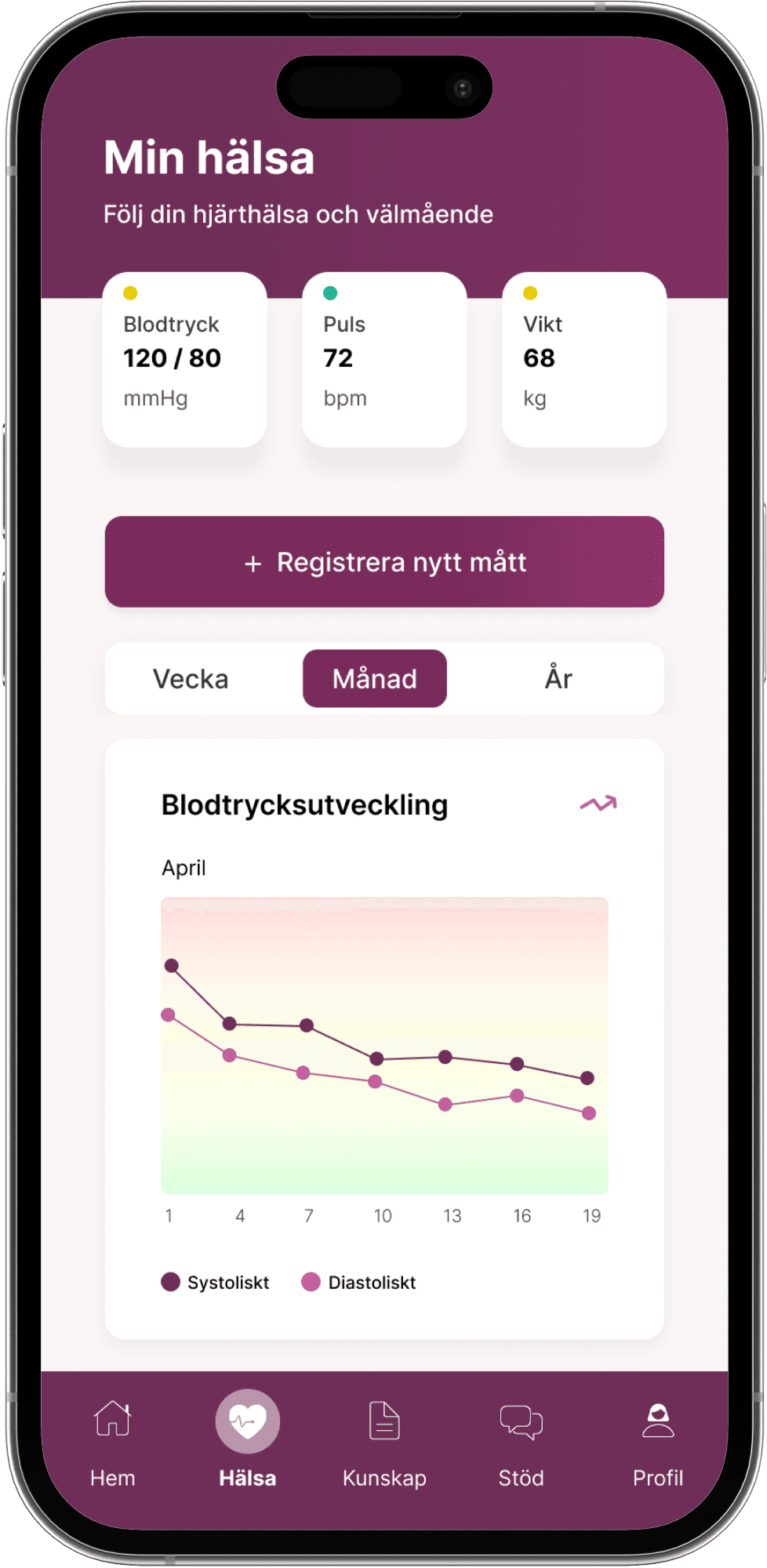
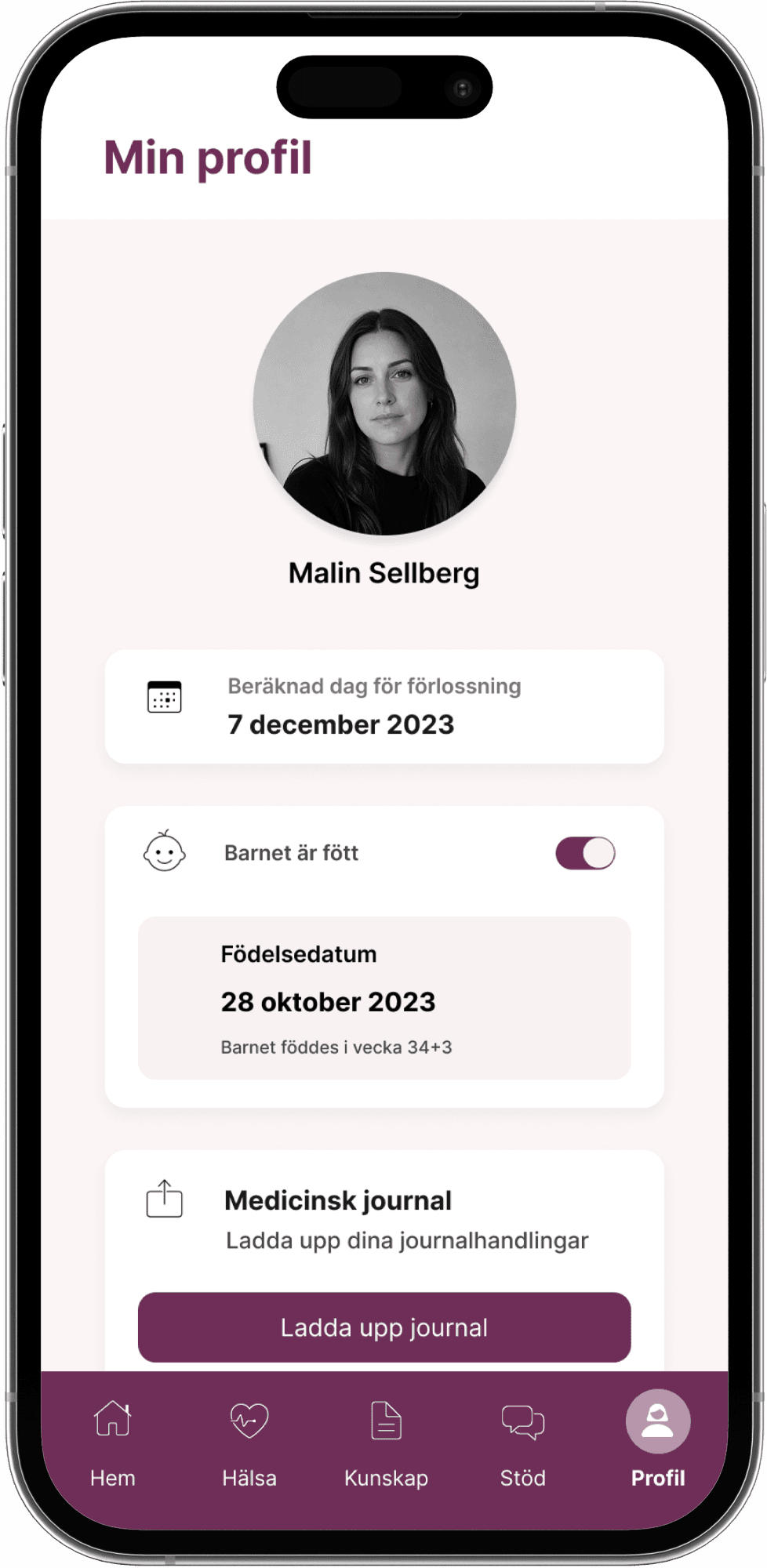
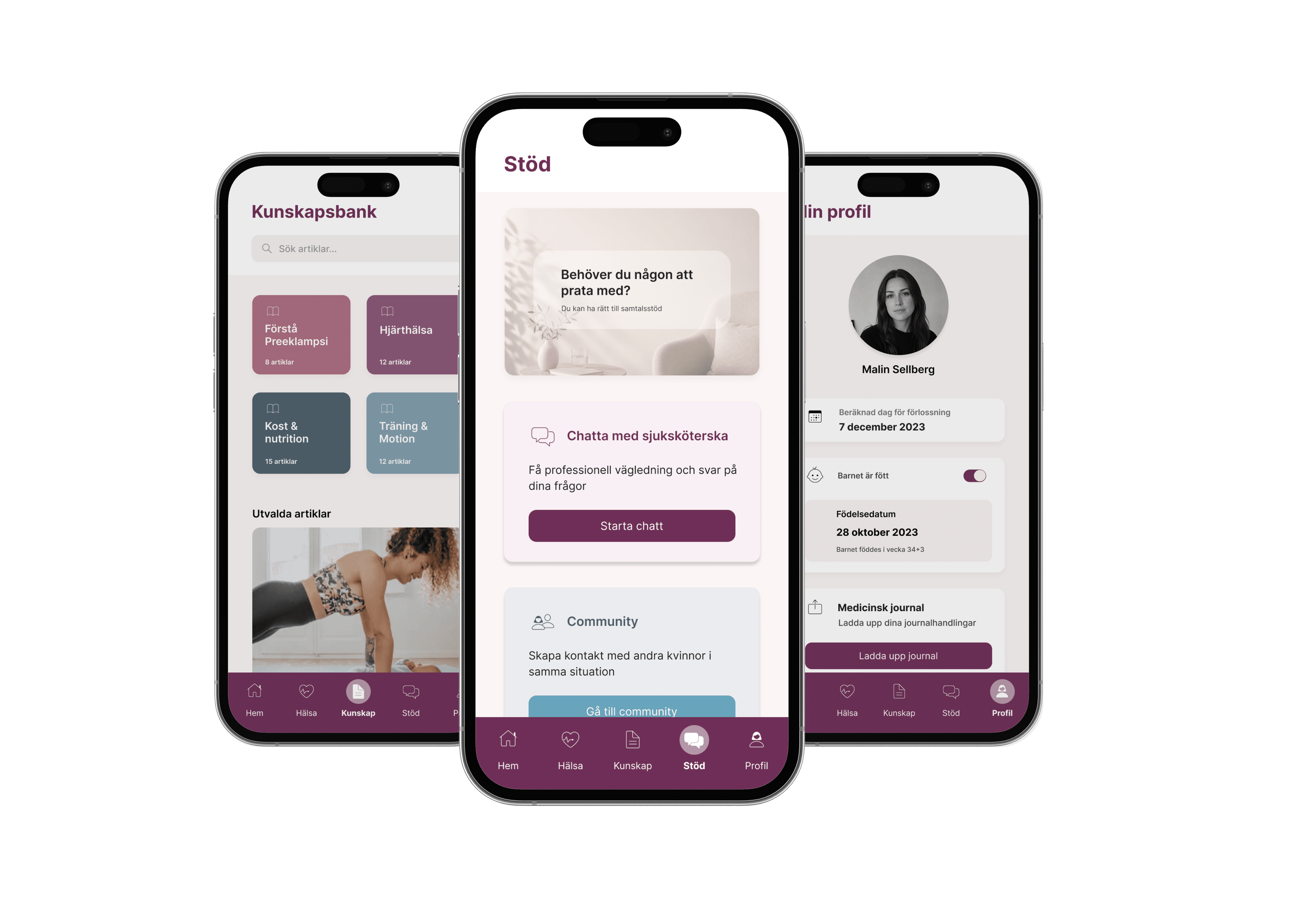
a digital support concept for ongoing guidance and follow-up at home
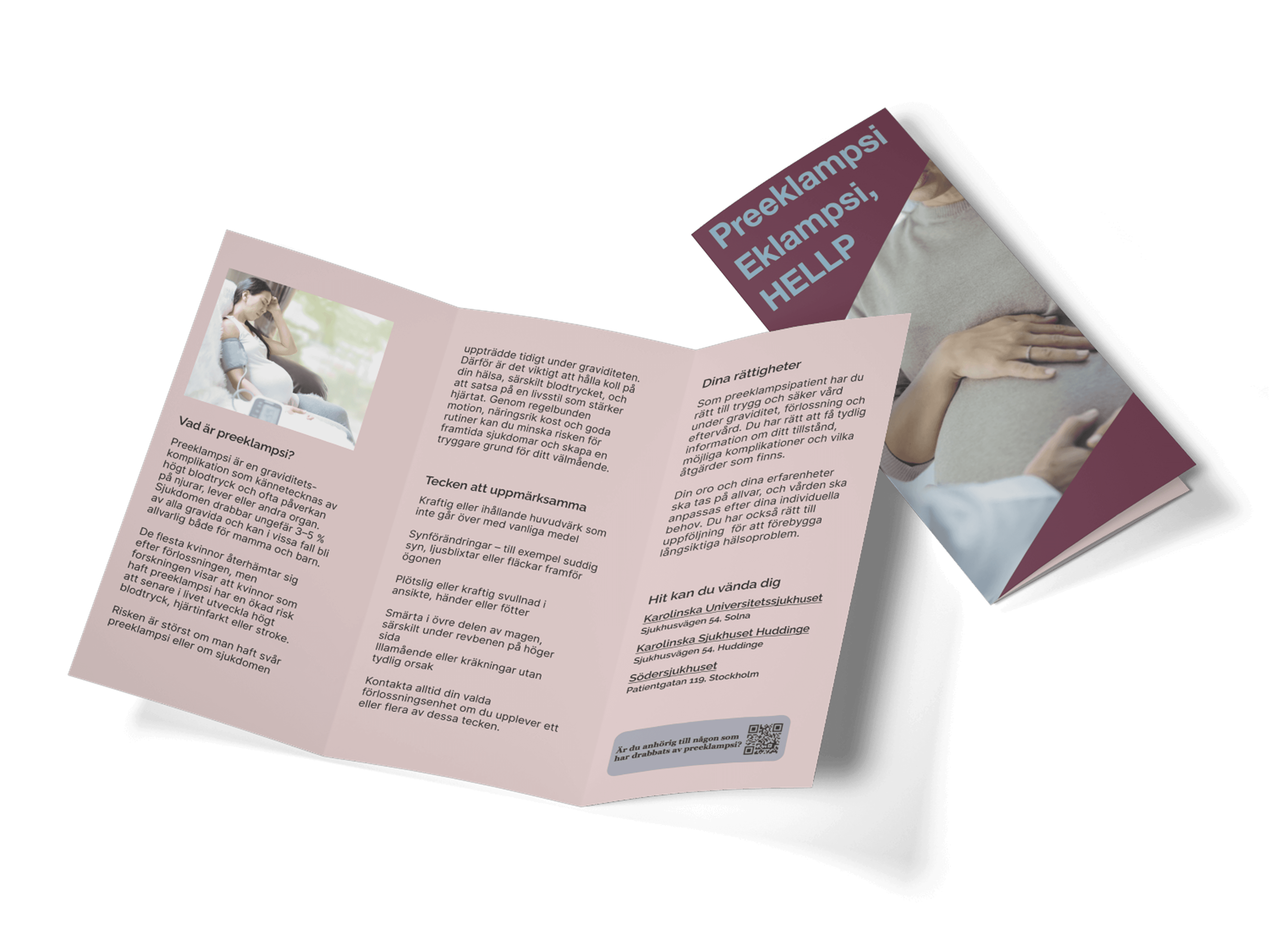
physical materials to support key moments within the care journey
Using both digital and physical touchpoints made it possible to meet women in different contexts — before, during, and after care — with different needs and levels of readiness.
Together, these concepts explore how support can move from isolated touchpoints to a more continuous and reassuring experience.
outcome.
The project resulted in a set of insights and early concept directions for how healthcare services could better support women after preeclampsia.
The work was presented to researchers, clinicians, and business developers at KI Innovations, and has since been incorporated into ongoing research and funding applications.
“The work has since been incorporated into ongoing research and funding applications.”
Following the project, I was also engaged to support the team with visualisations and presentation material for research funding — a collaboration that continued for over a year.


testimonial.
"Highly impressive work from research to insight synthesis. The results have already been incorporated into our research funding applications."
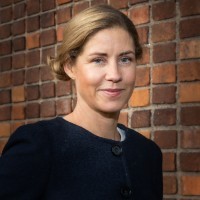
Anna Sandström
MD Obstetrician & Researcher in Maternal Health